
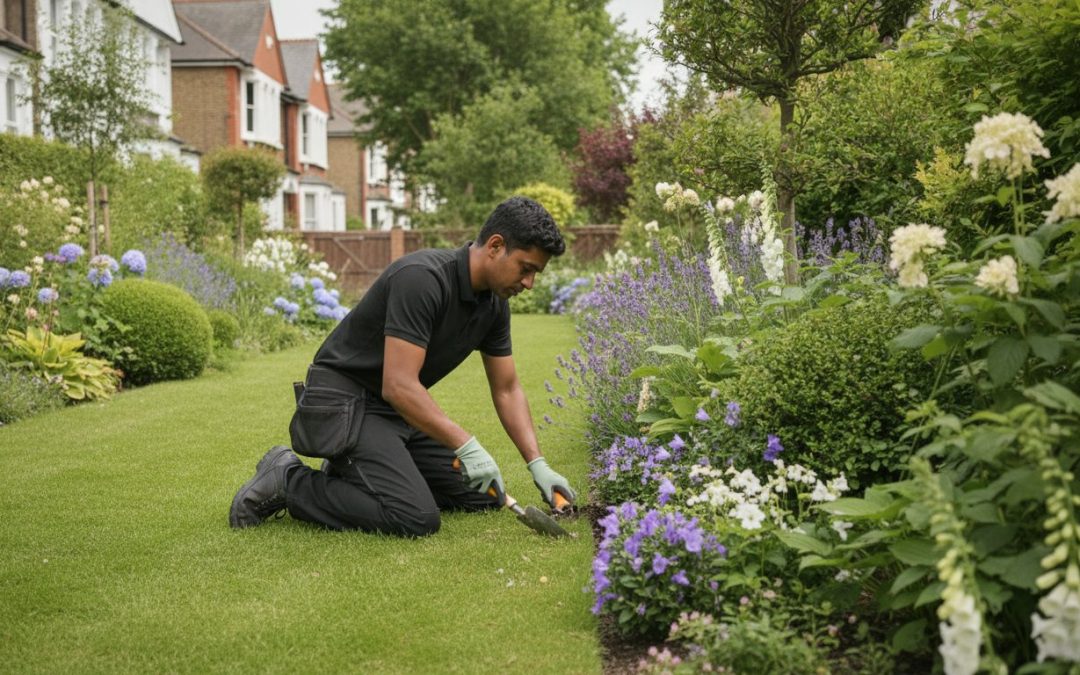
Over 50% of UK landscaping and horticulture businesses report they cannot find enough skilled staff to fill their vacancies. This significant skills gap means there has never been a better time to learn how to become a professional gardener UK. You might feel overwhelmed by the choice between various RHS levels or wonder if you need a university degree to get started. It is common to worry about the physical toll of the work or feel confused about where to find your first client. We understand that trading a desk for a trowel feels like a big leap.
This guide provides a clear roadmap to help you transition into the industry with confidence. You will discover the exact qualifications required, the reality of 2026 training costs, and how to gain the practical experience that employers actually value. We also clarify the difference between garden maintenance and design so you can choose the path that suits your skills. From understanding the 2026 National Living Wage of £12.71 to finding local training centres, here is everything you need to launch a successful career in the Great British outdoors.
Key Takeaways
- Define the core duties of the job, focusing on essential soft landscaping tasks like mowing, weeding, and hedge cutting.
- Discover how to become a professional gardener UK by choosing the right RHS Level 2 certifications and safety training for equipment.
- Learn how to build a practical portfolio using your own garden space, allotments, or community volunteering opportunities.
- Compare the benefits of self-employment against joining an established gardening firm to plan your long-term career path.
- Identify the specific training programmes available to help you master the professional standards expected by clients today.
What is a Professional Gardener? Defining the Role in the UK
A professional gardener is an expert who manages the health and aesthetics of outdoor spaces in exchange for payment. While many people enjoy gardening as a hobby, the professional version requires a higher level of discipline and technical knowledge. Understanding this distinction is the first step in learning how to become a professional gardener UK. You aren’t just “pottering about” in the soil. You are responsible for the long-term vitality of a client’s landscape. If you are researching What is a Professional Gardener?, you will find it is a role defined by consistent, high-quality maintenance and a deep understanding of the British growing season.
The role focuses primarily on “soft landscaping,” which is the cultivation and care of living elements within a garden. Your daily schedule will involve a variety of practical tasks. Core duties include precision mowing, professional hedge cutting, thorough weeding, and seasonal pruning. You might work in domestic settings, looking after private back gardens, or in commercial grounds keeping for business parks and housing estates. Both paths require a sharp eye for detail. With a significant skills gap affecting over 50% of businesses in 2026, the demand for people who can master these fundamentals is incredibly high.
Soft Landscaping vs. Hard Landscaping
The gardening industry is broadly split into two categories. Soft landscaping deals with everything that grows and breathes. This includes grass, shrubs, trees, and flowers. Hard landscaping involves construction tasks. This includes laying paving, installing fencing, or building decking and brick walls. At Premium Garden Services, we focus exclusively on the soft side of the trade. We believe that specialising in plant health, lawn treatments, and expert pruning allows us to provide a better service. We don’t build patios; we make sure the life within the garden thrives. Focusing on soft landscaping is often the fastest route for those figuring out how to become a professional gardener UK.
The Physicality and Seasonal Rhythm
Gardening is a physically demanding career that requires genuine stamina. You will work outdoors in all British weather conditions. This includes hot summer afternoons and drizzly November mornings. Your workload will shift with the seasons. Spring and summer are dominated by frequent mowing and lawn treatments. Autumn brings heavy leaf clearance and hedge tidying. Winter is the time for structural pruning and preparing the soil for the coming year. You need a “can-do” attitude and the ability to stay active for long periods. It’s a rewarding career for those who prefer fresh air to a desk, provided they are prepared for the physical reality of the job.
Essential Qualifications: RHS Courses and Horticultural Training
You need more than a green thumb to succeed in this industry. While passion is a great start, formal credentials provide the professional assurance that clients and employers expect. If you are researching how to become a professional gardener UK, the Royal Horticultural Society (RHS) is your first port of call. Their qualifications are the industry benchmark. They prove you understand the science behind the soil, not just how to pull a weed. Most reputable firms look for an RHS Level 2 Certificate as a minimum requirement for new hires.
RHS Level 2 and 3 Explained
The RHS Level 2 Certificate in Practical Horticulture focuses on the essentials. You will learn about plant growth, propagation, and standard garden maintenance. For the 2026 to 2027 academic year, fees at institutions like the Windsor Forest Colleges Group are approximately £1,450. You must also factor in the RHS learner registration fee, which is currently £230. If you want to move into supervisory roles, the Level 3 Certificate is the next step. It covers advanced plant health and more complex management skills. These courses are available at local colleges across the country, often with part-time options to suit those already working.
Specialised Machinery and Safety Certificates
Practical skill with machinery is just as vital as plant knowledge. To work safely on commercial or domestic sites, you should pursue LANTRA or NPTC certifications. These modules cover the safe operation of petrol mowers, hedge cutters, and leaf blowers. If your role requires applying professional-grade chemicals, you are legally required to hold PA1 and PA6 pesticide licences. Safety training is not just a box-ticking exercise. It protects you and the public whilst ensuring equipment lasts longer. Our horticultural skills training UK is designed to bridge the gap between classroom theory and these essential on-site skills.
Theoretical knowledge of soil health and plant biology is what separates a professional from a hobbyist. You need to understand why a plant is struggling, not just how to replace it. This expertise allows you to offer lawn treatments and pruning services that actually improve the garden over time. For a broader look at the industry standards, you can view The Career Roadmap provided by the National Careers Service. It outlines the typical skills and routes into the profession. Combining these official resources with hands-on experience is the most reliable way to build a career. If you are ready to start, consider looking into our professional gardener training to gain the specific maintenance skills needed for 2026.
Gaining Practical Experience: From Allotments to Apprenticeships
Experience is the most valuable asset you can bring to a new employer. When you are figuring out how to become a professional gardener UK, you quickly learn that theory only takes you so far. You need to get your hands in the soil. Practical experience is the currency of this trade. It proves you can handle the physical demands and understand the nuances of the British seasons. Employers value “weed and prune” experience because it shows you know the difference between a prized perennial and a common weed before you pull it up.
Start in your own garden. If you don’t have outdoor space, take on a local allotment to master seasonal timings and soil behaviour. This allows you to experiment with plant care without the pressure of a paying client. Whilst studying for Essential Qualifications: RHS Courses, you should be applying those lessons in a real-world setting. Apprenticeships are another excellent route. From August 2026, the government fully funds training costs for apprentices aged 16 to 24. With an apprentice minimum wage of £8.00 per hour, it is a viable way to earn whilst you learn the trade on the ground.
Volunteering and Community Projects
Volunteering is a powerful way to build a professional portfolio. Look for local park groups or “Britain in Bloom” projects in your area. These organisations often need help with seasonal planting and maintenance. It is a great way to see different garden styles and soil types that you might not encounter at home. Since many of these charities and community organisations rely on effective communication to attract volunteers, check out Throughmotion Ltd. to see how they help such groups grow their impact. Always document your work. Take clear “before and after” photos of your weeding and pruning tasks. These images show progress and prove your eye for detail to future employers.
Entry-Level Maintenance Roles
Many successful gardeners start as “Assistant Gardeners” in local firms. These roles allow you to work under a seasoned professional who can show you the ropes. You will learn the rhythm of a professional lawn mowing service London during the peak summer season. Reliability and punctuality are just as important as plant knowledge in these positions. Firms need people who turn up on time and work efficiently. Mastering the basics of mowing and hedge cutting in an assistant role creates a solid foundation for your entire career.
The Career Roadmap: Self-Employment vs. Joining a Firm
Deciding between self-employment and joining an established team is a pivotal moment in your professional journey. Each path offers a different lifestyle and set of responsibilities. When you are mapping out how to become a professional gardener UK, it’s helpful to view your career as a series of logical steps. Most successful practitioners follow a similar trajectory to ensure they have the skills to survive the competitive British market.
- Step 1: Obtain your initial qualifications, such as the RHS Level 2, and invest in basic, high-quality equipment.
- Step 2: Gain at least one to two years of supervised experience within a maintenance firm. This is where you learn the speed and precision required for professional work.
- Step 3: Choose your niche and target area. You might decide to focus on high-end residential gardens in Wimbledon or Raynes Park.
- Step 4: Build a local client base through a solid reputation for reliability and quality workmanship.
The Reality of Going Freelance
Going freelance gives you total control over your schedule. However, it also means you are responsible for every aspect of the business. You must manage your own Public Liability Insurance, which typically costs between £55 and £90 per year for basic cover. You also need a Waste Carrier Licence from the Environment Agency to legally dispose of green waste for your clients. If your annual turnover exceeds £90,000, you are legally required to register for VAT. One of the biggest challenges is “the winter gap.” Income naturally fluctuates when mowing stops in late October. Successful freelancers in Stoneleigh and New Malden plan for this by offering winter pruning and leaf clearance services to maintain cash flow.
Working for a Professional Maintenance Firm
Joining a firm provides immediate job security and a steady wage. You won’t need to worry about the overheads of van maintenance, fuel, or buying expensive petrol mowers. You get to learn best practices from seasoned experts like Kevin, who can teach you the most efficient ways to handle complex hedge cutting or lawn treatments. There is also a clear path for career progression. You can start as a Junior Gardener and work your way up to Team Lead or Manager. This route allows you to focus entirely on the craft without the stress of marketing and administrative tasks. If you prefer a supportive team environment, consider applying for gardener training with an established provider to get your start.
Take the Next Step: Training with Premium Garden Services
Learning how to become a professional gardener UK is a process of building practical competence. Our 2026 gardener training programmes are built for people who want to work in the real world. We focus exclusively on soft landscaping. This includes mastering mowing, hedge cutting, and expert pruning. With over 10 years of commercial experience, we know exactly what local homeowners expect. Our approach is direct and grounded in daily practice. You will gain the skills needed to enter a sector where over 50% of businesses are currently looking for staff. We bridge the gap between having a general interest in plants and possessing the professional discipline required to maintain high-end gardens. Our training is designed to get you onto a site and earning a wage as quickly as possible.
Our Practical Training Modules
We offer hands-on sessions that cover lawn treatments, weeding, and shrub care. These aren’t just theoretical lectures. You will spend time working with the tools of the trade, learning how to handle petrol machinery safely and efficiently. We maintain small group sizes. This allows for direct, one-to-one feedback from a reliable local expert. You will learn the efficient rhythms of residential maintenance, from the first mow of spring to the final leaf clearance of autumn. Our goal is to make sure you are ready for a full day of work on a professional site. We focus on the tangible, visual outcomes that clients value most, such as crisp hedge lines and healthy, weed-free borders. You will learn how to diagnose common lawn issues and apply the correct treatments to ensure a lush, green finish.
Starting Your Journey in South West London
We provide training opportunities across Raynes Park, Wimbledon, and Kingston. These are busy areas with a constant need for skilled maintenance services. We specialise in helping career changers move into the industry with confidence. You don’t need an extensive background in horticulture to start; you just need a strong work ethic and a “can-do” attitude. You will become part of a local network that prides itself on workmanship and reliability. This community of professionals provides support as you navigate your first few months in the trade. By training in the specific areas where you will likely work, you gain a better understanding of the local soil types and garden styles. Reach out to us today to find out about our upcoming course dates and take the next step toward a rewarding outdoor career.
Start Your Professional Gardening Career Today
The path to a successful career in horticulture is now clearer than ever. You understand the importance of RHS qualifications and the necessity of hands-on experience through volunteering or apprenticeships. Whether you aim for the independence of self-employment or the stability of a maintenance firm, the 2026 market is full of opportunity. Learning how to become a professional gardener UK is about more than just plant knowledge; it’s about mastering the practical skills that keep British gardens thriving.
Our training programmes are designed to get you site-ready. Led by Kevin, who has 10 years of commercial gardening experience, we focus on the essential soft landscaping tasks that define the trade. We provide the local expertise needed to serve residential clients in Wimbledon, Kingston, and Surbiton with confidence. We don’t just teach the theory; we show you how to deliver professional results efficiently. Enquire about our Professional Gardener Training courses today to begin your transition into the industry. There is a rewarding, active career waiting for you in the Great British outdoors. Let’s get to work.
Frequently Asked Questions
Do I need a degree to be a professional gardener in the UK?
You don’t need a university degree to enter the industry. Most employers prioritise practical experience and vocational certificates like the RHS Level 2 over academic degrees. While a degree in botany or horticulture exists, it’s often more suited to research or large-scale estate management than daily residential garden maintenance.
What is the average salary for a gardener in London?
The average salary for a gardener in London is £35,579 per year according to 2026 data. Experienced professionals or those running their own successful firms in areas like Wimbledon can often earn more. Self-employed rates in the South East typically range between £35 and £55 per hour depending on the specific task.
How long does it take to become a qualified gardener?
It usually takes one year to complete an RHS Level 2 Certificate whilst working or volunteering. However, mastering the trade takes roughly one to two years of consistent on-site experience. This timeframe allows you to see a full cycle of the British seasons and understand how to become a professional gardener UK through hands-on practice.
Can I become a gardener at 40 or 50 as a career change?
Yes, gardening is a very popular choice for career changers in their 40s and 50s. Many people find the transition from a desk job to the outdoors highly rewarding for their physical health, though it is wise to monitor your baseline fitness with Ready Health before taking on such manual work. You just need a reasonable level of fitness and stamina to handle the daily demands of mowing, weeding, and hedge cutting.
What tools do I need to start a gardening business?
To start, you need a reliable petrol lawnmower, professional hedge cutters, and a leaf blower. You should also invest in high-quality hand tools like secateurs, loppers, and a sturdy spade. It is essential to include safety gear such as steel-toed boots, heavy-duty gloves, and ear protection for machinery work from day one.
Are RHS qualifications worth it for maintenance work?
RHS qualifications are definitely worth the investment for maintenance professionals. They provide a recognised benchmark that builds immediate trust with new clients and employers. Understanding the science of soil health and plant biology allows you to offer professional lawn treatments and pruning services that go beyond basic tidying.
Is gardening a seasonal job in the UK?
Gardening is a year-round profession, though the specific tasks change significantly with the weather. The peak season for mowing and weeding runs from March to October. During the winter months, the focus shifts to structural pruning, leaf clearance, and preparing soil beds for the following spring growth.
Do I need a driving licence to be a professional gardener?
A full UK driving licence is almost essential for a career in professional gardening. You need to transport heavy machinery, tools, and green waste between different client sites efficiently. Most professional maintenance firms in areas like Kingston and Surbiton require a licence as a standard condition of employment for their mobile teams.