
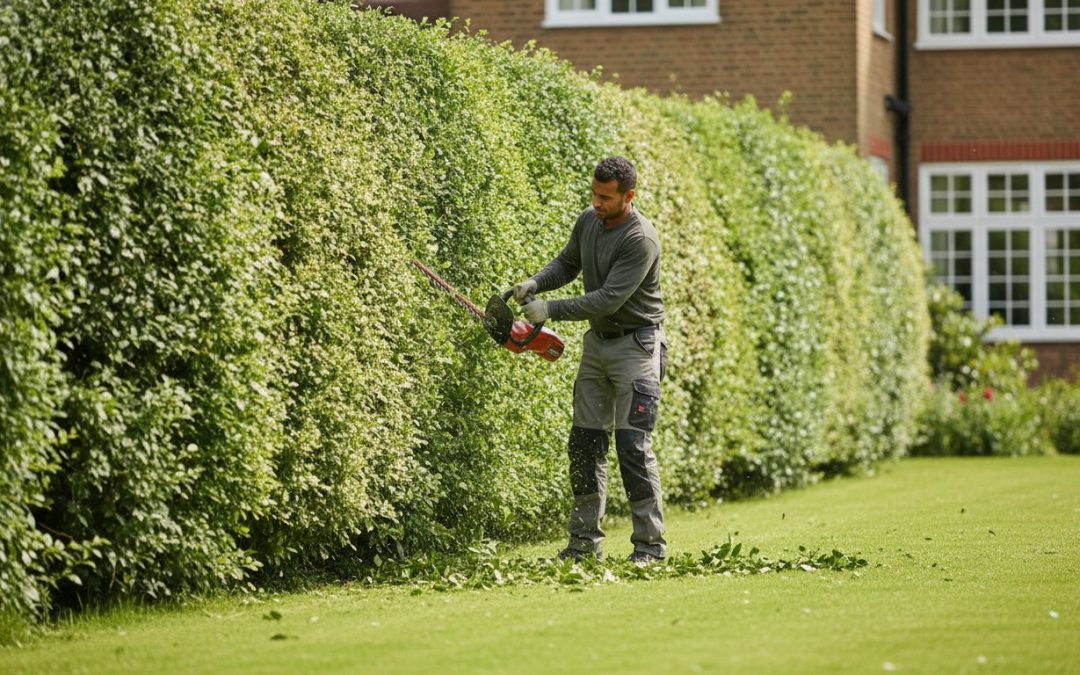
Cutting your hedge into a perfect vertical box is actually the quickest way to kill off the bottom branches. It seems logical to trim straight up and down, but this prevents sunlight from reaching the base, leading to those unsightly gaps and thin patches. It’s a common frustration for homeowners who want sharp boundaries but end up with “wavy” tops and foliage that constantly sprawls over the pavement.
You can achieve a professional, manicured finish by changing your approach to “tapered geometry.” This guide explains exactly how to keep hedges neat using the same reliable techniques we use across South West London gardens. You will discover how to maintain dense, healthy growth from the ground up while ensuring your garden stays within legal height limits and respects local wildlife.
We’ll walk you through the essential tools for the job, the best times of year to prune to avoid disturbing nesting birds, and the specific cutting patterns that guarantee a straight edge every time. It’s about working smarter to create a manageable maintenance schedule that keeps your garden looking crisp and orderly through every season.
Key Takeaways
- Learn why tapering your hedge into an “A-shape” is the professional secret to preventing bare patches and encouraging dense growth at the base.
- Discover how to keep hedges neat by using string lines and specific cutting patterns for perfectly level tops across long boundaries.
- Understand why South West London staples like Privet and Laurel require unique pruning techniques to avoid brown leaf edges and woody stems.
- Identify the right equipment for your garden size and why blade sharpness is the most critical factor for a crisp, professional finish.
- Master the difference between formative pruning and maintenance trims to ensure your hedges remain healthy and manageable year-round.
The Fundamentals of Hedge Neatness: Growth Cycles and Timing
Neatness is often misunderstood as just a flat top. In reality, a truly tidy hedge is about density and health. If your boundary is thin or gappy at the bottom, it won’t look sharp no matter how straight you cut the top. Looking into the history and importance of hedges reveals they are living structures that require active management to thrive. Learning how to keep hedges neat means understanding that the green wall you see is a result of consistent, purposeful growth management.
You need to distinguish between formative pruning and maintenance trimming. Formative pruning happens in the first two to three years of a hedge’s life. It involves cutting back stems quite hard to encourage a thick base. Maintenance trimming is what you do for established hedges. This happens once or twice a year for most species to keep them within their allotted space. Skip the formative stage and you’ll likely struggle with a leggy, thin hedge for years to come.
Timing is also a legal matter in the UK. The Wildlife and Countryside Act 1981 protects nesting birds. It is an offence to intentionally damage or destroy an active nest. Most nesting occurs between March and August. We always recommend a thorough visual check before you start any work during these months. If you spot a nest, you must leave that section of the hedge alone until the chicks have fledged.
The secret to a professional finish is light and frequent trimming. Many homeowners wait for the hedge to look overgrown before tackling it with a heavy annual cut. This often results in “holes” where you’ve cut back into old, leafless wood. Trimming more often encourages the plant to produce a flush of small side shoots. This creates a tight, dense surface that looks much neater than a sprawling hedge that has been hacked back once a year.
Deciduous vs. Evergreen: Different Rules for Different Leaves
Evergreen hedges like Privet or Yew stay green all year but grow fast. They usually need two or three trims between May and September to stay crisp. Deciduous hedges like Beech or Hornbeam are different. If you prune these in late summer, they are more likely to hold onto their brown, dead leaves throughout the winter. This provides a better screen than a bare, twiggy boundary during the colder months. Flowering hedges need a bespoke schedule; you should only prune them immediately after they finish blooming to avoid cutting off the buds for next year.
The Best Weather for a Tidy Trim
Pick your day carefully. Avoid trimming in direct, scorching sunlight. High heat can lead to leaf scorch on the newly exposed inner foliage, leaving your hedge with ugly brown patches. Overcast days are much better for the health of the plant. The leaves stay hydrated, and the plant recovers faster. Also, avoid pruning too late in the autumn if a hard frost is forecast. Freshly cut tips are vulnerable to freezing, which can kill off the new growth and ruin the neat appearance you worked hard to achieve.
Professional Techniques to Keep Hedges Neat Between Trims
Maintaining a sharp garden boundary doesn’t require a daily battle. It’s about knowing how to keep hedges neat through small, tactical adjustments. The most effective professional secret is the “A-shape” profile. You should always aim for the base of your hedge to be slightly wider than the top. This allows sunlight to reach the lower branches, preventing the bottom from becoming thin and woody. This university guide to pruning confirms that this tapered shape is essential for long-term plant health and structural integrity.
Between major trims, you will notice “wanderers” appearing. These are fast-growing shoots that break the clean line of your hedge. Don’t feel you need to wait for a full maintenance day to handle them. A quick walk-past with a sharp pair of hand shears can keep these in check. It only takes a few minutes but makes a massive difference to the overall look. If you find the foundational shape is becoming too difficult to manage yourself, our professional hedge cutting service can reset those crisp lines for you.
A neat hedge also relies on what’s happening at ground level. Weeds and long grass growing into the base of your hedge create a messy, neglected appearance. Keeping the bottom edge clear and mulched defines the boundary. It creates a high-contrast line that makes the green foliage look even sharper. It’s a simple step that separates a well-kept garden from an average one.
Step-by-Step: Setting Your Line
For long boundaries, guessing the height by eye rarely works. Drive two wooden stakes into the ground at either end of the hedge. Tie a bright piece of garden string between them at your desired height. This gives you a perfectly level guide to follow. Always start cutting from the bottom and work your way up. This prevents falling clippings from getting caught in the lower branches and obstructing your view. Every few metres, use the “step back” rule. Walk five paces away to check the symmetry from a different perspective. It’s the only way to catch a sloping top before it becomes obvious.
Managing the “Top-Heavy” Problem
Hedges naturally grow faster at the top because they are reaching for the light. This is called apical dominance. To counteract this, you may need to thin out the top more aggressively than the sides. Removing some of the thicker, vertical stems allows light to penetrate deep into the centre of the hedge. If you prefer a formal look, stick to a flat-top finish with the string line. For a more traditional South West London feel, a slightly rounded top can be easier to maintain as it sheds snow and heavy rain more effectively, preventing the branches from splaying open.
Species-Specific Care for South West London Gardens
Every plant has its own rhythm. Understanding these differences is the foundation of how to keep hedges neat without causing long-term damage. Privet is a South West London staple for a reason; it’s hardy and fast-growing. However, if you don’t trim it at least twice during the summer, it quickly becomes woody. Regular light pruning prevents the stems from thickening too much, ensuring the surface remains a dense, green carpet rather than a collection of bare sticks.
Laurel requires a completely different level of finesse. While it’s tempting to use powered trimmers on Cherry or Portuguese Laurel, the large leaves often end up shredded. These mangled edges turn brown and unsightly within days. For a truly professional finish, use secateurs to prune individual stems just above a leaf node. This keeps the foliage looking intact and vibrant. Yew is the ultimate choice for formal boundaries, but it demands patience. It grows slowly, so any mistakes in your line will take years to correct. Take your time with Yew to maintain its reputation as the “King of Hedges.”
In New Malden and surrounding areas, Box (Buxus) remains popular for low, formal borders. The main challenge here is Box Blight. To keep these hedges crisp and healthy, only prune in dry weather and ensure your tools are sterilised. Good airflow is essential. A congested, damp Box hedge is a magnet for disease, which can quickly turn a neat border into a patchy mess.
Dealing with London Clay Soils
The heavy clay soil found in areas like Stoneleigh and Worcester Park significantly impacts hedge health. Clay holds water in winter and bakes hard in summer. If your hedge roots are waterlogged, the bottom foliage will yellow and drop, making it impossible to achieve a tidy, dense look. Improving drainage and feeding the soil with organic mulch is vital. A well-nourished hedge produces consistent growth, which is much easier to shape than the weak, patchy shoots produced by a struggling plant.
Privacy vs. Neatness in Suburban Wimbledon
Privacy is a major concern in Wimbledon, but you must balance this with local regulations. Under Part 8 of the Anti-social Behaviour Act 2003, local councils can investigate evergreen hedges that exceed 2 metres in height if they adversely affect a neighbour’s property. Failure to comply with a council’s remedial notice can lead to a fine of up to £1,000. In Kingston and Surbiton, be mindful of public footpaths. A neat hedge should never obstruct a pavement. Keeping the face of your hedge perfectly vertical ensures you provide privacy without encroaching on public space or falling foul of council rules.
Essential Tools and Safety for Maintenance
Having the right kit is the most important factor in how to keep hedges neat without spending hours on the task. While powered trimmers are excellent for clearing large areas quickly, they often lack the precision needed for a truly sharp finish. For smaller suburban boundaries, a high-quality pair of hand shears allows for much better control. You can feel the tension in the branches and adjust your stroke to avoid taking too much off at once. This manual touch is what creates that crisp, “straight-edged” look that power tools sometimes miss.
Sharpness is the number one factor in hedge health. A dull blade doesn’t cut; it crushes and tears the plant tissue. These jagged wounds take longer to heal and leave the hedge vulnerable to pests and diseases. We always ensure our blades are razor-sharp before every job. If your shears are leaving ragged edges, they need immediate attention. For thicker, individual stems that the shears can’t handle, keep a pair of loppers nearby. They provide the “surgical” precision needed to remove woody growth without damaging the surrounding foliage.
Cleaning your tools is a step many people skip. Diseases like Box Blight can easily be carried from one plant to another on dirty blades. A quick wipe with a disinfectant or surgical spirit between different sections of the garden prevents cross-contamination. It also keeps your equipment in good working order, preventing rust and sap build-up that can make the tools stiff and difficult to use. If you don’t have the time or the tools to manage this yourself, you can book our professional hedge cutting team to handle the hard work for you.
The Professional Toolkit
We always recommend bypass secateurs over anvil types for maintenance. Bypass blades work like scissors, providing a clean, slicing action that is much better for living wood. Anvil blades tend to crush the stem, which can lead to dieback. For tall hedges, telescopic shears are a game-changer. They allow you to reach the top without constantly moving a ladder. Finally, always use a tarpaulin or “hedge sheet” at the base before you start. It makes the clean-up process five times faster and ensures no clippings are left to rot in your lawn or flower beds.
Staying Safe Whilst Trimming
Safety is non-negotiable. Always wear eye protection and sturdy gardening gloves. Small twigs and debris can easily fly up when using powered trimmers or manual shears. In older gardens across Worcester Park, the ground is often uneven or sloped. If you are using a ladder, ensure it is on a stable, level base. Never overreach. A good rule of thumb is to never trim above shoulder height whilst standing on a ladder. If the top of the hedge is out of reach, use a proper garden platform or call in a professional who has the correct height-access equipment.
Why Professional Maintenance Outperforms DIY
While the tips provided in this guide show you how to keep hedges neat between visits, achieving a truly flawless finish often requires professional intervention. Consistency is the primary benefit. A regular maintenance schedule ensures your boundary never reaches that messy, overgrown stage where it becomes a chore to fix. We handle the heavy lifting, keeping the foundational structure perfect so your interim tidying is as easy as possible.
Professional-grade tools also make a visible difference. Our trimmers and shears are maintained to a standard that most domestic equipment cannot match. This results in a cleaner cut and a sharper surface that stays looking better for longer. Waste removal is another significant factor. Hedge cutting produces an incredible volume of green waste. We take all clippings with us, leaving your driveway, pavement, and flower beds spotless. You won’t have to worry about multiple trips to the local tip or overfilling your garden bin.
Expertise goes beyond just the cut. We have a trained eye for spotting issues like Box Moth or fungal infections before they take hold and ruin your investment. Catching these problems early often saves the hedge from needing total replacement. We understand the specific growth patterns of different species and adjust our technique accordingly. This level of horticultural care ensures your garden remains healthy and vibrant throughout the year.
This commitment to plant health is a standard held by top professionals worldwide. For example, the team at We Love Trees applies similar arborist expertise to ensure that larger trees and shrubs are maintained with structural integrity and long-term vitality in mind.
The Premium Garden Services Difference
Kevin brings 10 years of experience in both commercial and residential garden maintenance to every job. We are specialists in “soft landscaping,” meaning we focus entirely on the plants and their health, rather than building walls or patios. This dedication allows us to provide expert care for homes in Raynes Park, Wimbledon, and the surrounding areas. We create tailored maintenance plans that fit your garden’s specific needs. If you are ready for a sharper look, book your professional hedge cutting service today.
Integrated Garden Care
A neat hedge is the foundation of an orderly outdoor space, but it works best as part of a complete care routine. We often combine our visits with professional mowing to provide a total garden transformation in a single session. For those who enjoy getting stuck in themselves, we also offer gardener training. This service allows you to learn professional techniques directly from us, giving you the confidence to manage your garden between our visits. A well-maintained garden is a source of pride, and we are here to help you achieve it.
Achieve the Sharpest Boundaries in Your Street
Mastering the art of a tidy garden starts with a consistent approach to growth. You now know that how to keep hedges neat involves much more than a quick trim. It’s about using tapered geometry to protect the base, timing your work to respect local wildlife, and choosing the right tools for every species. Whether you are managing fast-growing Privet in Raynes Park or formal Box borders in New Malden, these professional techniques ensure your boundaries stay healthy and manageable year-round. This focus on sustainable plant health is a universal principle, shared by experts in drought tolerant landscape design Southern California who prioritise low-maintenance, climate-appropriate solutions.
While DIY maintenance keeps things tidy between visits, a professional touch provides the structural integrity your plants need to thrive. We bring 10 years of commercial gardening experience to every property we visit. As a local expert serving SW London and Surrey, we specialise in soft landscaping and maintenance that prioritises the health of your garden. We take pride in leaving every site spotless and every hedge perfectly aligned.
Ready to transform your garden boundaries into sharp, manageable features? Get a professional hedge cutting quote for your garden and let us handle the heavy lifting. You can enjoy a crisp, professional finish that keeps your garden looking its best throughout every season. It’s time to reclaim your weekends and enjoy the view.
Frequently Asked Questions
What is the best month to cut hedges in the UK?
The ideal time depends on the species, but most evergreen hedges benefit from a trim in late spring and again in late summer. For deciduous hedges like Beech or Hornbeam, wait until August to ensure they retain their brown leaves for winter privacy. Always avoid major work during the peak of winter to prevent frost damage to fresh cuts.
Can I cut my hedge back hard if it has become too wide?
You can cut species like Yew, Privet, or Laurel back to the trunk, but many conifers will not regrow from old wood. If you hack into the brown, leafless interior of a Leylandii, it will likely leave a permanent dead patch. It is best to reduce width gradually over several seasons to maintain a healthy appearance.
How do I stop my hedge from having gaps at the bottom?
The most effective way to prevent gaps is to use the “A-shape” trimming technique. By keeping the base wider than the top, you ensure sunlight reaches the lower branches. This is the core secret of how to keep hedges neat and dense from the ground up, as it prevents the bottom foliage from dying back due to shade.
Is it illegal to cut hedges during bird nesting season?
It is an offence under the Wildlife and Countryside Act 1981 to intentionally damage or destroy an active bird nest. While there is no total ban on domestic trimming, the main nesting season runs from March to August. You must perform a thorough visual check for nests before starting any work to stay within the law.
How often should I trim a Privet hedge to keep it neat?
A Privet hedge typically requires two to three trims per year to maintain a crisp, formal line. Because Privet grows rapidly in the South West London climate, these regular light touches prevent the stems from becoming too thick. Frequent trimming also encourages a denser surface that provides better privacy for your garden.
What should I do with my hedge clippings?
You can compost small amounts of green clippings or use your local council’s garden waste collection service. However, large volumes of woody material are often difficult to manage in suburban gardens. One benefit of hiring a professional is that we remove all debris, ensuring your site is left spotless without you needing to visit the tip.
How tall can my garden hedge legally be in London?
There is no fixed legal height limit, but local councils can intervene if an evergreen hedge exceeds 2 metres and affects a neighbour’s enjoyment of their property. This falls under Part 8 of the Anti-social Behaviour Act 2003. Keeping your boundary below this height helps avoid formal complaints and potential fines of up to £1,000.
Do I need a professional to trim my hedge or can I do it myself?
You can perform light maintenance yourself, but a professional is better for major shaping or tall boundaries. We have access to industrial-grade tools and the expertise to identify diseases like Box Blight early. If you want perfectly straight lines and a healthy, dense finish, a professional visit usually produces a superior result.