
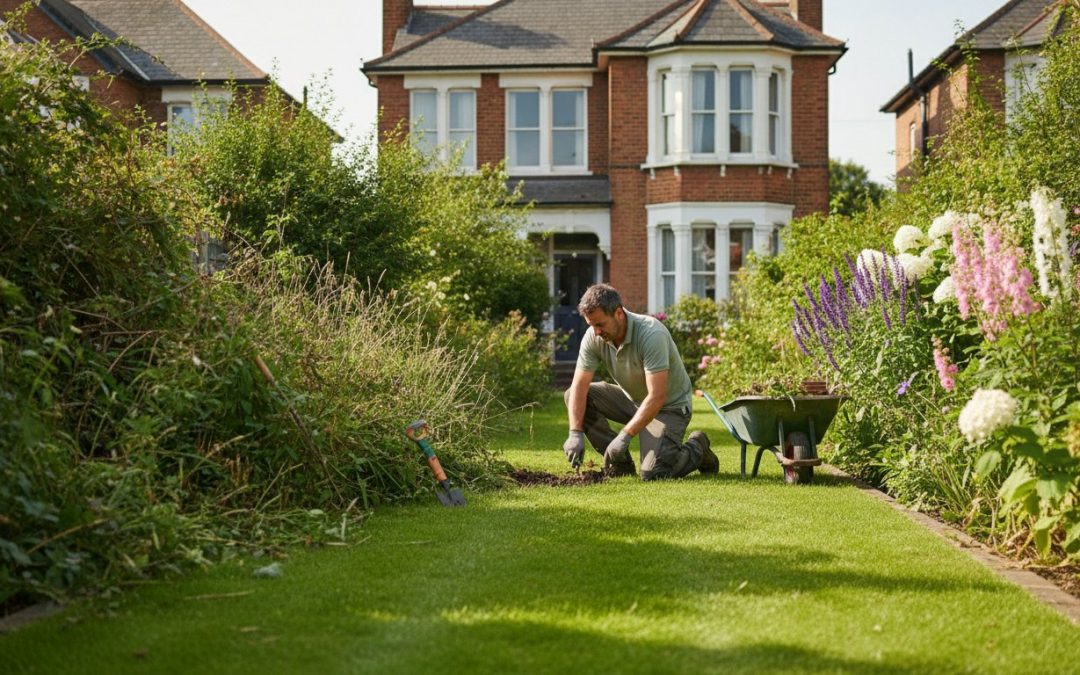
Hiring a standard “garden clearance” team often results in a bare patch of dirt where your favourite roses used to be. It’s a common fear for homeowners who have watched their outdoor space disappear under a wave of brambles and tall grass. If you’re struggling with a neglected plot, professional overgrown garden maintenance London services offer a way to restore order without destroying your garden’s character.
We understand how overwhelming it feels to look out at a sea of weeds when you don’t have the time to tackle it yourself. You want a neat, manageable garden, but you need to know which plants are worth saving and which ones should be pruned back. This guide explains how to transform a wild London garden into a functional outdoor space using expert restoration techniques. We’ll explore how to identify prized plants, navigate the 2026 “Simpler Recycling” garden waste rules, and establish a reliable maintenance plan to keep the chaos at bay.
Key Takeaways
- Learn why professional overgrown garden maintenance London is a systematic restoration of soft landscaping rather than just a basic rubbish clearance service.
- Discover a restoration framework that prioritises safety and garden structure to ensure your prized plants are protected during the process.
- Understand how to manage heavy clay soils in areas like Wimbledon and Surbiton to prevent rapid weed growth during wet London winters.
- Follow a practical 5-step process to reclaim your outdoor space, from clearing surface debris to restoring your lawns and hedges.
- Learn how a reliable maintenance plan keeps your soft landscaping healthy and prevents your garden from becoming neglected again.
What is Overgrown Garden Maintenance in London?
Professional overgrown garden maintenance London is the systematic restoration of soft landscaping that has fallen into neglect. It’s more than just a quick tidy up. This process involves a horticultural approach to reclaiming a space whilst protecting the plants you actually want to keep. Many homeowners find their gardens become unmanageable after just one or two missed seasons. In the capital, the combination of mild, damp winters and the urban heat island effect encourages rapid, year-round growth.
A key part of this work is identifying “volunteers”. These are self-seeded weeds or invasive plants that have moved in. Without a trained eye, it’s easy to mistake a dormant, high-value ornamental shrub for a common weed. Restoration focuses on uncovering the original structure of your garden. We work through the layers of overgrowth to find the healthy soil and plants beneath the mess.
Restoration vs. Clearance: Why the Distinction Matters
There’s a significant difference between a clearance service and professional maintenance. A basic clearance is a one-off removal of debris and surface vegetation. It’s often performed by teams who don’t understand essential gardening principles. They might clear the site, but they often leave the soil damaged or accidentally remove expensive, mature shrubs. Dedicated overgrown garden maintenance London is a more careful process. It involves precise pruning, targeted weeding, and lawn recovery. This ensures the long-term health of your outdoor space. We specialise in what grows. Our goal is to leave you with a garden that’s ready to thrive, not just a bare patch of ground.
The Impact of Neglect on London Outdoor Spaces
Neglect does more than just ruin the view. When grass grows tall, it goes to seed and stops spreading its roots. This weakens the lawn and allows weeds to take over. In South West London, invasive species like bindweed and ground elder are common. These plants use underground systems to spread rapidly through neglected borders. They can quickly smother smaller plants and even damage light structures. Regular maintenance is always more cost-effective than an emergency clearance. It prevents these invasive species from gaining a foothold. It also ensures that your soil nutrients aren’t being wasted on supporting a forest of weeds. Keeping on top of the work means your garden remains a functional part of your home.
Keeping your garden clear also ensures that the structural elements of your property are visible for inspections. For those who require a professional property survey, click here to find out more about South Surveyors.
The Restoration Framework: Assessing an Overgrown Space
A professional assessment is the first step in any restoration project. We use a practical approach to evaluate what can be saved and what needs to go. This starts with a hierarchy of needs. Safety is our primary concern. We look for hidden hazards like rotten timber, concealed glass, or trip hazards buried under long grass. Only once the site is safe do we move on to the garden’s structure and aesthetics. This methodical way of working ensures that overgrown garden maintenance London projects remain controlled and predictable.
We look closely at the skeleton of the garden. Established hedges are often the most valuable assets in a neglected space. Many species, like privet or yew, can handle a significant hard prune. We evaluate if the hedge can be brought back to a manageable size or if it has become too woody to recover. The lawn also requires a careful eye. Often, what looks like a dead patch is simply a dormant lawn starved of light by a thick layer of weeds and moss. We test the soil and check for healthy grass crowns before deciding on a recovery plan or a full re-turf.
Identifying “Keepers” Amongst the Overgrowth
Brambles and ivy are experts at suffocating prize plants. During an assessment, we carefully peel back layers of vegetation to find hidden ornamental shrubs. It’s common to find mature camellias, hydrangeas, or climbing roses struggling for light beneath the mess. These “keepers” provide the garden with instant maturity once they’re released. Professional pruning is essential here. We use specific techniques to thin out old wood and encourage new growth without shocking the plant. If you’re unsure what’s worth saving in your own space, our professional garden restoration team can help identify and protect your valuable plants.
Dealing with London’s Most Common Weeds
London gardens face a constant battle with aggressive weeds like bindweed, nettles, and ground elder. Simply cutting the foliage back won’t solve the problem. These plants have extensive root systems that must be tackled to prevent immediate regrowth. This is particularly challenging when managing clay soils, which are prevalent across South West London. Clay holds onto roots tightly, making manual extraction a labour-intensive task. We focus on soft landscaping expertise rather than general labour. We understand the growth patterns of these weeds and use the right tools to remove the roots, ensuring your overgrown garden maintenance London results last longer than a single season.
Essential Steps to Reclaim Your Overgrown Garden
Once the assessment is complete, we move into the physical work of restoration. Reclaiming a space through professional overgrown garden maintenance London requires a methodical approach to avoid damaging the soil or the plants you’ve decided to keep. We follow a clear restoration framework that moves from the ground up. This ensures every task builds toward a manageable, healthy outdoor space.
Our process follows five essential steps. Step 1 involves clearing surface debris and litter. We remove fallen branches, old plastic pots, and any household waste hidden in the undergrowth. Step 2 focuses on tackling long grass. We use heavy-duty equipment to reduce the height in controlled stages. Step 3 is systematic weeding and root removal. We target the source of the problem rather than just cutting the tops off. Step 4 involves pruning and shaping overgrown hedges and shrubs to restore their original structure. Finally, Step 5 is implementing a lawn treatment plan for long-term recovery.
Mowing and Lawn Recovery
You cannot mow long grass on the lowest setting immediately. Doing so shocks the grass and can kill the lawn entirely. We reduce the height gradually over several visits to allow the grass to adapt. Once the height is manageable, we look at scarification and aeration. These techniques remove the “thatch” layer of dead moss and weeds that smothers the soil. This allows water and nutrients to reach the roots again. Using professional-grade mowers ensures a clean cut that promotes healthy regrowth rather than tearing the grass blades. It’s a slower process, but it’s the only way to save a neglected lawn.
Hedge and Shrub Restoration
Overgrown hedges often lose their shape and become hollow inside. We use specific techniques to reduce the height safely without leaving large, permanent bare patches. Timing is critical for this work. Certain shrubs require specific pruning windows to avoid cutting off next year’s flowers or causing dieback. We provide a neat, professional finish that encourages the plant to fill back in from the centre. This systematic approach transforms a wild hedge into a structured boundary that’s easy for you to maintain. It turns a source of stress into a valuable feature of your garden once again.
Local Challenges: Managing South West London’s Clay Soils
South West London is famous for its heavy, London Clay soil. This is especially true in Wimbledon, Kingston, and Surbiton. This soil type is a primary driver for professional overgrown garden maintenance London. Clay holds water like a sponge. During our wet winters, this moisture supports constant weed growth while your lawn is dormant. Perennial weeds like docks and dandelions thrive in these conditions. They send deep taproots into the heavy ground, making them very difficult to remove without professional tools.
Drainage is another significant issue in Stoneleigh and Worcester Park. Neglected gardens often develop standing water because the overgrowth blocks sunlight and prevents natural evaporation. This creates a cycle of dampness that encourages moss and fungal diseases. We address these drainage problems as part of the restoration. Our goal is to ensure the soil can breathe again once the surface is clear. This prevents your garden from turning back into a swamp after the first heavy rain.
Soil Management for Neglected Gardens
Compaction is the biggest threat to a healthy lawn on clay soil. When a garden is neglected, the soil becomes a dense, airless mass. This prevents grass roots from spreading. Once we finish a major clear-up, we focus on restoring the soil structure. We use aeration to break up the compaction and allow oxygen to reach the roots. Mulching is also a key part of the process. A thick layer of bark or compost suppresses new weeds and slowly improves the clay’s texture over time.
Seasonal Timing for London Restorations
The best time for a garden restoration in the UK is during the autumn or early spring. Autumn is particularly effective for hedge restoration and lawn repair. The soil remains warm from the summer, which helps new roots establish before the frost hits. You must also consider the bird nesting season. We avoid heavy pruning on large hedges between March and August to protect nesting birds. Planning your restoration around these windows ensures the best results for your plants and the local environment. If you’re ready to reclaim your space, our reliable gardening team is ready to help you get started.
Professional Maintenance with Premium Garden Services
Reclaiming a neglected garden is a significant task, but keeping it in order is where the real value lies. Premium Garden Services is led by Kevin, who brings 10 years of commercial gardening experience to every project. We don’t try to be a “jack of all trades” company. Unlike some providers who offer everything from plumbing to window cleaning, we focus entirely on soft landscaping. We specialise in what grows. This dedicated expertise ensures that your overgrown garden maintenance London is handled with horticultural precision rather than just brute force. For those interested in how structural elements like explore Natural Stone Retaining Walls with Cascade Outdoor Services can enhance a plot, we recommend looking at professional hardscaping as a separate, complementary discipline.
Our approach is built on being a reliable local expert. We pride ourselves on being industrious, neat, and easy to talk to. We understand that your garden is an extension of your home. We treat it with the respect it deserves. Once the initial restoration is complete, we provide a clear plan to prevent the overgrowth from returning. Regular visits ensure that weeds are kept under control and your plants receive the care they need at the right time of year. Following a structured monthly garden maintenance London checklist is one of the most effective ways to ensure your restored garden never falls back into neglect.
Our Soft Landscaping Specialisms
We provide expert mowing, weeding, and pruning services that are tailored to the specific needs of your garden. Our team understands the growth patterns of common London weeds and the best techniques for restorative pruning. We also offer professional lawn care and treatments to ensure your grass recovers its health and colour. By choosing not to offer hard landscaping, tree surgery, or garden design, we stay focused on our core strength: horticultural maintenance. This specialisation means we can provide a higher level of care for your lawns, hedges, and borders. For a comprehensive overview of what professional upkeep looks like across every season, our commercial garden maintenance London 2026 guide outlines the tailored treatments and schedules that keep grounds healthy year-round.
Booking Your Garden Restoration in South West London
We provide overgrown garden maintenance London across a wide range of areas. Our team is frequently working in Raynes Park, Stoneleigh, Wimbledon, Kingston, and Surbiton. During our initial visit, we conduct a thorough assessment of your outdoor space. We identify the plants worth saving, check the condition of your soil, and discuss your goals for the garden. You’ll receive a straightforward plan for the restoration and a reliable schedule for ongoing upkeep. We believe in transparency and hard work. If you are ready to see the potential in your outdoor space again, you can contact Premium Garden Services for a restoration quote and take the first step toward a manageable garden.
Reclaim Your Outdoor Space Today
Transforming a neglected garden takes more than a one-off clearance. It requires a systematic approach that protects your soil and saves your prize plants. By choosing professional overgrown garden maintenance London, you turn a source of stress into a managed, beautiful asset. We’ve discussed how identifying “keepers” and managing heavy clay soils are essential steps in this journey. Success lies in horticultural knowledge rather than just brute force.
Kevin brings 10 years of commercial gardening experience to every project. We provide a specialist focus on soft landscaping and maintenance across South West London and Surrey. We don’t do design or hard landscaping; we stick to what we know best: making things grow and keeping them tidy. This dedicated approach ensures your garden stays in top condition year-round. Book Your London Garden Restoration Assessment and let us help you rediscover your garden’s potential. Order and neatness are within reach.
Frequently Asked Questions
How much does overgrown garden maintenance cost in London?
Industry rates for gardening in London vary based on location and the specific condition of the site. Average hourly rates typically range from £17 to £55, with North London often seeing prices between £30 and £40 per hour. For a small, overgrown garden, a 3 to 4 hour clearance often costs between £255 and £340. We provide specific quotes based on the actual size and density of the overgrowth during our initial assessment.
Can you save a lawn that has been overgrown for years?
Most neglected lawns can be saved through a systematic recovery process. We use controlled mowing to reduce height gradually without shocking the grass crowns. Once the surface is clear, treatments like scarification and aeration remove the thick layer of moss and thatch that smothers the soil. This allows light and nutrients to reach the roots again, encouraging the dormant grass to regrow and thicken over time.
Do I need to be at home while you clear my garden?
You don’t need to be present while we work as long as we have clear access to the garden. Many of our clients in South West London provide side gate access or make arrangements for us to enter the property. We’ll discuss these details during your initial assessment to ensure the process is convenient for your schedule. We pride ourselves on being industrious and tidy, even when working independently.
What happens to the green waste after the garden is cleared?
We organise the disposal of all green waste through authorised recycling centres. As of March 31, 2026, “Simpler Recycling” regulations require all London boroughs to offer separate garden waste collections. We ensure all clippings, weeds, and branches are handled according to these local rules. Please be aware that the cost for waste removal is often quoted separately from the hourly labour rate for the restoration work.
How long does it take to restore an overgrown garden?
Restoration time depends entirely on the size and condition of the space. A medium-sized garden with significant overgrowth typically takes between 5 and 8 hours of intensive work to clear. Larger or more neglected plots might require two full days to complete the initial clearance and restorative pruning. We provide a specific time estimate after our first site visit so you know exactly what to expect.
Can you prune my hedges if birds are nesting in them?
We cannot prune hedges if active bird nests are present. It’s an offence under the Wildlife and Countryside Act to damage or destroy nests while they’re in use. We check all hedges before starting any work, especially during the main nesting season from March to August. If we find a nest, we’ll delay the pruning of that specific area until the chicks have fledged and the nest is empty.
Is it better to clear an overgrown garden in winter or summer?
Late autumn and early spring are the ideal times for overgrown garden maintenance London. During these months, the soil is easier to work and many plants are dormant, which reduces the risk of shock during heavy pruning. Clearing in winter is also effective because the lack of foliage makes it easier to see the garden’s underlying structure and identify hidden hazards that might be buried under summer growth.
Do you provide regular maintenance after the initial tidy-up?
We specialise in ongoing maintenance plans to keep your restored garden in top condition. After the initial restoration is complete, we can set up a regular schedule for mowing, weeding, and hedge cutting. This prevents the garden from becoming neglected again and ensures your outdoor space remains a manageable part of your home. Our focus on soft landscaping means your lawns and borders receive expert care throughout the year. To understand exactly what each visit should cover, explore our guide to monthly garden maintenance in London for a detailed seasonal checklist.