
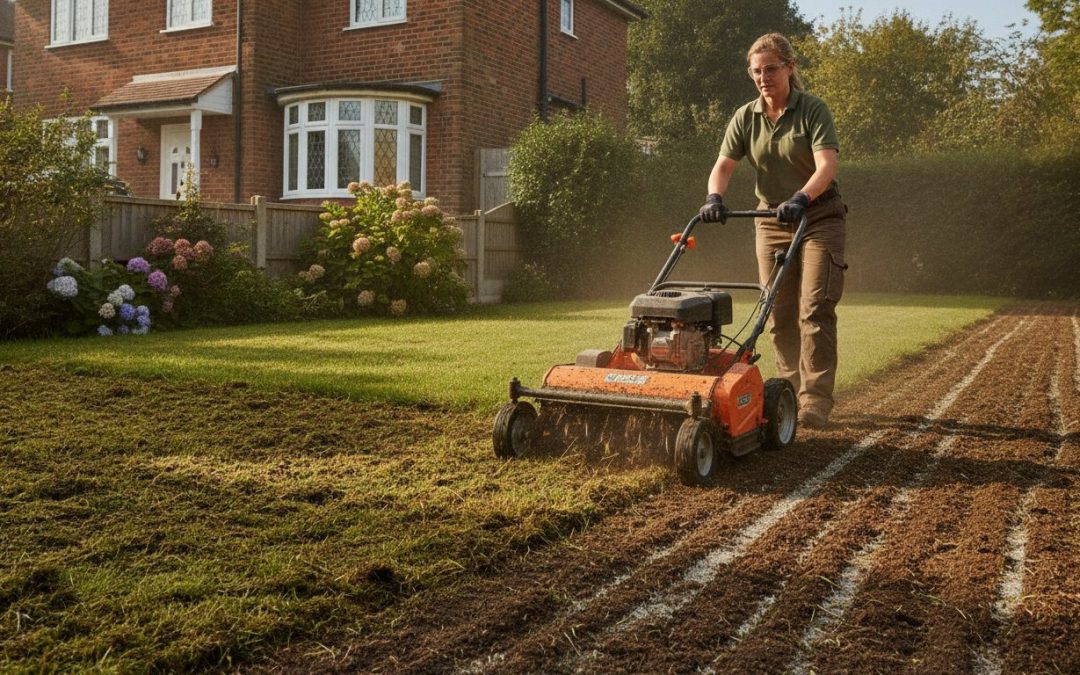
That spongy, moss-filled lawn might look like it needs a heavy rake right now, but jumping in at the wrong time can do more harm than good. Most UK homeowners feel the frustration of a garden that stays brown and patchy long after winter ends. It’s common to feel confused about when to scarify lawn UK spaces, especially when the weather is unpredictable. You want a thick, green carpet, but you don’t want to leave your soil bare and vulnerable to weeds.
Timing your maintenance with the natural growth cycle of the grass is the secret to a successful transformation. This guide explains the precise windows for scarification to help you move from a mossy mess to a lush, healthy garden. We will cover the essential soil temperature requirements, such as the 7°C threshold, and the pros and cons of spring versus autumn. You will also find details on the 2026 garden waste regulations and tips for deciding between a DIY hire or professional help.
Key Takeaways
- Learn exactly when to scarify lawn UK gardens by monitoring soil temperatures and active growth cycles in spring and autumn.
- Discover how to use a simple core sample test to identify if your lawn has more than 1cm of suffocating thatch.
- Understand why applying moss killer several weeks before you start is a critical step for a clean finish.
- Follow a professional step-by-step method that includes gradual mowing to prepare the grass for mechanical treatment.
- Find out how to manage the “ugly duckling” phase with the right overseeding and watering techniques for a lush recovery.
What is Lawn Scarification and Why is it Essential for UK Gardens?
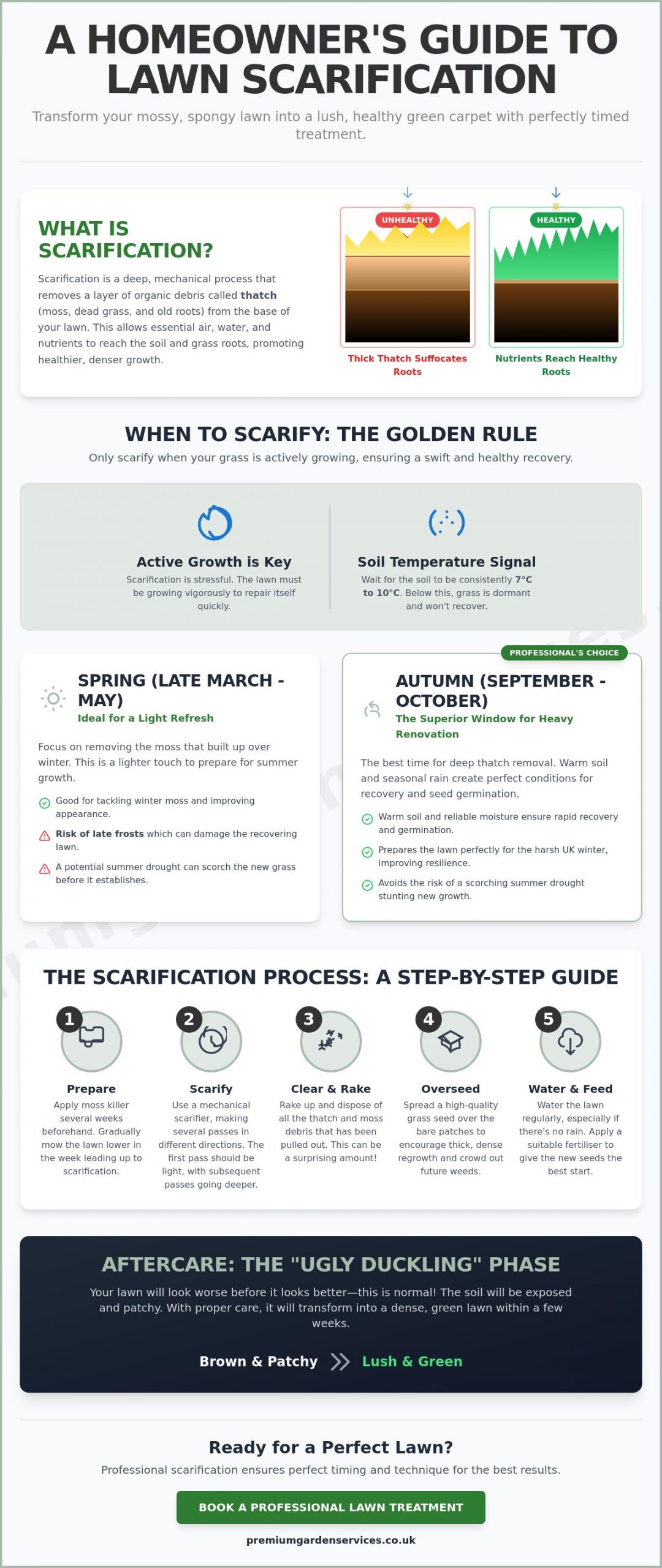
Scarification is a deep mechanical cleaning process. It removes the organic debris like dead grass, old roots, and moss that builds up at the base of your turf. This debris is technically known as thatch. To understand the mechanics of the equipment used, you can look into What is a Dethatcher (Lawn Scarifier)? and how it differs from a simple rake. Determining when to scarify lawn UK gardens is the first step toward a healthy garden. A thin layer of thatch is healthy for a lawn. It acts as a cushion and protects the soil. However, once that layer grows thicker than 1cm, it begins to suffocate the grass by blocking water and oxygen.
Many UK gardens suffer from a “sponginess” underfoot. While it might feel soft, it’s usually a sign of trouble. This sponginess indicates a thick mat of thatch that prevents nutrients from reaching the roots. If your lawn looks brown and patchy after a long winter, it’s likely because the grass is struggling to breathe. Knowing when to scarify lawn UK properties depends on identifying this buildup before the moss completely takes over during our wet seasons.
Understanding Thatch, Moss, and Lateral Growth
Thatch acts like a waterproof barrier over your soil. In London gardens where heavy clay often limits drainage, this layer traps moisture right at the surface. This damp environment is exactly where moss thrives. When we scarify, we break this cycle. Removing the debris encourages “tillering.” This is the biological process where grass plants produce new side shoots from the base. It’s the most effective way to thicken a lawn and naturally crowd out weeds.
The Benefits of Professional Scarifying
A professional scarify provides immediate practical benefits. It improves airflow to the root zone, which builds better drought resistance for the warmer months. It also ensures your lawn treatments work harder. Instead of fertilisers sitting on top of a dead organic layer, they sink directly into the soil. The visual transformation is significant. Your lawn will move from a dull, brownish hue to a vibrant, healthy green that looks and feels like a professional pitch.
The Best Time to Scarify a Lawn in the UK: Spring vs Autumn
The Golden Rule of lawn care is simple. Only scarify when your grass is in a state of active growth. Scarification is a stressful event for any garden. If the grass isn’t growing vigorously, it won’t have the energy to recover. This leaves your soil bare and open to weed invasion. Knowing when to scarify lawn UK gardens depends entirely on the soil temperature and the weather forecast.
Your primary “go” signal is a consistent soil temperature of 7°C to 10°C. Below this, the grass stays dormant. If you rake or machine-scarify too early, you risk damaging the crown of the plant without any growth to repair it. We strictly avoid mid-summer because drought stress makes recovery impossible without constant irrigation. Similarly, mid-winter is a no-go zone. Frost can kill exposed roots that have been thinned out by a scarifier.
Regional variations play a huge role across the country. In South West London, the milder climate often allows for an earlier start in March. In the North, you might need to wait until late April for the ground to warm up sufficiently. If you’re unsure about your local conditions, booking professional lawn treatments can help ensure the timing is perfect for your specific postcode.
Spring Scarification (Late March to May)
Spring is the season for light maintenance. The goal here is usually moss removal rather than deep thatch renovation. It’s perfect for refreshing a lawn that looks tired after a damp winter. You must monitor the forecast for late frosts. A sudden cold snap right after scarifying can set your lawn back by weeks. It’s a great time to tidy up without the brutal look of a heavy autumn renovation.
Autumn Scarification (September to October)
Autumn is widely considered the superior window for heavy scarification. The soil is still warm from the summer, and the seasonal rains provide the moisture needed for rapid germination. This is the time for deep thatch removal. By clearing out the debris now, you prepare the grass for the harsh UK winter. It ensures the roots have access to oxygen whilst the plant is still active. Most experts prefer this window because it avoids the risk of a following summer drought, which can often scorch a newly scarified spring lawn. It’s the most reliable time to ensure your garden is ready for the next year.
How to Tell if Your Lawn Needs Scarifying: The Diagnosis
Determining when to scarify lawn UK gardens doesn’t require expensive laboratory equipment. You can diagnose the health of your turf with a few simple home tests. The most reliable method is the Core Sample Test. Use a garden trowel to cut a small, wedge-shaped piece of turf about 10cm deep. Pull the wedge out and look at the side profile. You’ll see the green grass on top and the soil at the bottom. The brown, fibrous layer in the middle is the thatch. If this layer is thicker than 1cm, your lawn is struggling to breathe.
Visual cues are also helpful. Walk across your garden and look closely at the base of the grass blades. If you see a “brown carpet” of dead matter instead of clear soil, thatch has taken over. You should also assess your moss coverage. If moss covers more than 25% of the surface, a standard rake won’t be enough. You’ll need mechanical scarification to clear the space for new grass to grow. Another quick check is the Pencil Test. Try pushing a pencil into the ground when the soil is moist. If you meet significant resistance before the pencil is halfway in, you’re dealing with a combination of dense thatch and soil compaction.
Recognising the Signs of Excessive Thatch
Your lawn often tells you it needs help through the way it feels. A “bouncy” or spongy sensation underfoot is a classic sign of a thick thatch mat. This layer acts like a literal sponge. You might notice water pooling on the surface after a light rain shower because the moisture can’t penetrate the organic barrier. Another red flag is slow grass growth. If you’ve applied fertiliser and mowed regularly but the lawn remains thin and pale, the nutrients likely aren’t reaching the roots.
Local Soil Factors: The Clay Challenge in SW London
Geography plays a massive role in how quickly thatch builds up. In areas like Kingston and Surbiton, the soil is notoriously heavy with clay. This type of soil compacts very easily. When soil is compacted, the natural microbes that break down dead grass can’t survive. This causes thatch to accumulate much faster than in sandy regions. For local gardens, scarification is rarely a standalone job. The heavy clay usually requires professional aeration alongside scarifying to ensure the soil stays open and healthy. If your garden sits on a clay base, you’ll likely need to monitor your thatch levels more frequently than those in other parts of the UK.
How to Scarify Your Lawn: A Step-by-Step Guide
Successful scarification requires a disciplined approach. You can’t simply wheel a machine onto a long, mossy lawn and hope for the best. Preparation starts weeks before the actual work begins. Knowing when to scarify lawn UK gardens involves more than just picking a month; it’s about following a strict pre-work checklist to ensure the grass survives the process. If you rush the preparation, you risk tearing out healthy grass plants along with the thatch.
Preparation and Mowing Heights
The first phase is moss control. Apply a high-quality moss killer, usually containing iron sulphate, two to three weeks before you plan to scarify. This kills the moss at the root. Dead moss turns black and becomes brittle, making it much easier to lift. If you skip this, you will simply spread live moss spores across your entire garden.
Mowing is the next critical step. You must never scarify long grass. It puts too much strain on the equipment and the grass roots. Start lowering your mower blades gradually over ten days. Aim for a final height of about 25mm. This allows the scarifier blades to reach the thatch layer without being blocked by long leaf blades. Ensure the soil is moist but the grass leaves are dry. Wet grass clumps together and clogs the machine, while bone-dry soil is too hard for the blades to penetrate.
Technique: Angles and Depth
Technique matters as much as the tools you use. For very small areas under 50 square metres, a manual spring-tine rake might suffice. However, for most UK gardens, a powered mechanical scarifier is essential. These machines use vertical metal blades to slice through the thatch. Setting the depth is the most common mistake. You want the blades to just touch the soil surface, perhaps 2mm to 3mm deep. Any deeper and you will scalp the lawn and destroy the root system.
Use the “diagonal” method for the best results. Pass the scarifier across the lawn in one direction, then perform a second pass at a 45-degree angle to the first. This “cross-hatching” ensures you lift the maximum amount of debris. Be prepared for the cleanup. Scarification produces “mountains” of waste. It’s common to remove ten times the volume of debris compared to a standard mow. If the scale of the job feels overwhelming, you can always book professional lawn treatments to handle the heavy lifting and waste disposal for you.
Once the passes are complete, use a leaf rake or a mower on a high setting to collect the loosened thatch. Your lawn will look ragged at this stage. This is normal. The goal is to see clear soil between the remaining grass plants, providing the perfect bed for the aftercare stage.
Aftercare: How to Help Your Lawn Recover Quickly
Do not panic when your garden looks like a ploughed field after the blades have finished their work. This is the “Ugly Duckling” phase. It’s a perfectly normal part of the process. You’ve cleared the debris, and now the soil is exposed and ready for renewal. Your success now depends on the timing of your aftercare. Knowing when to scarify lawn UK gardens is only half the battle; the recovery phase determines if you get a lush carpet or a field of weeds.
The most critical period is the first 14 days. During this fortnight, you must keep the soil consistently moist. New seeds and weakened grass plants cannot survive if the ground dries out. If you’ve timed your work for the autumn, the seasonal rain often does the heavy lifting for you. In the spring, you may need to step in with the sprinkler more frequently. This consistent moisture is the only way to ensure the new growth establishes itself before the weather turns too hot or too cold.
Overseeding and Fertilising
Selecting the correct seed mix is the first step toward a resilient lawn. For busy family gardens, a hard-wearing dwarf ryegrass is the best option. If your garden has heavy shade or you want a finer finish, choose a fescue-based mix. Your choice of fertiliser should match the season. Use a high-nitrogen feed in the spring to kickstart green growth. In the autumn, use a potassium-rich fertiliser to build root strength for the winter. Overseeding fills gaps before weeds can take hold.
Top Dressing: The London Clay Solution
In areas like Raynes Park and Wimbledon, the heavy clay soil presents a unique challenge. Clay compacts easily and traps water at the surface, which leads back to the moss problems you just solved. Applying a top dressing of a sand and soil mix is vital here. This mixture works its way into the holes left by the scarifier, improving drainage and soil structure. It also provides a protective layer for your new seed, ensuring better contact with the earth for faster germination.
Professional Maintenance in Raynes Park and Wimbledon
Hiring a local expert prevents the risk of permanent damage to your turf. Scarification is a brutal process that requires a steady hand and the right depth settings. Premium Garden Services handles the entire project, from the initial moss treatment to the final cleanup. Under the 2026 recycling regulations, disposing of the “mountains” of thatch produced can be difficult for many households. We take care of the waste removal and heavy lifting for you. Many of our clients combine this renovation with a professional lawn mowing service in London to ensure their lawn stays in peak condition throughout the year. We provide the professional assurance you need to turn a spongy, mossy garden into a vibrant, healthy green space.
Transforming Your Lawn for the Season Ahead
Mastering the timing of your garden maintenance is the difference between a patchy lawn and a professional finish. Success relies on monitoring the 7°C soil temperature threshold and using the core sample test to check thatch levels. Whether you choose the light touch of spring or a deep autumn renovation, proper aftercare ensures your grass recovers quickly. Consistency in watering and feeding during the first 14 days is the final step toward a healthy garden.
With your garden renovation underway, you might also want to explore Indoor Furniture from Living Chic to ensure your home’s interior is just as stylish and inviting as your new lawn.
Once your lawn is looking its best, it provides the perfect setting for garden parties and celebrations; for professional event catering, you can click here to learn more about the services offered by Grunts Hog Roast.
Getting the timing right for when to scarify lawn UK gardens can be a challenge with our unpredictable weather. We bring over 10 years of commercial gardening experience to every project. Our team understands the specific needs of SW London and Surrey soils, ensuring your turf gets the precise care it needs. We are fully equipped with professional-grade mechanical scarifiers to handle the heavy lifting and waste disposal efficiently.
Book your professional lawn scarification service with Premium Garden Services today. Your garden has the potential to be a lush, green highlight of your home. We look forward to helping you achieve that perfect finish.
Frequently Asked Questions
Can I scarify my lawn in April in the UK?
Yes, April is a popular month for spring maintenance. Knowing when to scarify lawn UK gardens depends on the weather, so you must check that the soil temperature has reached at least 7°C. If a late frost is forecast, it’s safer to wait until May. This ensures the grass is growing fast enough to recover from the mechanical stress.
Should I mow the grass before scarifying?
Yes, mowing is an essential preparation step. You should never scarify long grass because it clogs the machine and pulls at the roots. Gradually lower your mower blades to about 25mm over the ten days leading up to the job. This allows the scarifier blades to reach the thatch layer effectively without being blocked by long leaf blades.
How long does it take for a lawn to recover after scarifying?
Recovery typically takes between three and six weeks. A light spring scarify might look green again in 21 days with the right watering. A heavy autumn renovation takes longer, often closer to 42 days, as the grass prepares for winter. Recovery time depends on when to scarify lawn UK spaces; spring work usually bounces back faster than deep autumn renovations.
Is it better to scarify in the morning or afternoon?
Afternoon is generally better because the grass leaves need to be dry. Early morning dew makes the thatch clump together, which can jam the scarifier. However, the soil itself should remain slightly moist to allow the blades to penetrate. Aim for a dry, overcast day to avoid putting the grass under heat stress during the process.
Can I scarify a new lawn?
No, you should never scarify a new lawn. Turf or seed needs at least 12 months to develop a strong enough root system to withstand the metal blades. Scarifying too early will simply rip the young plants out of the ground. Wait until the lawn is fully established and has been mowed regularly for at least a year before performing deep maintenance.
What happens if I scarify too deep?
Scarifying too deep will “scalp” your lawn. This happens when the blades cut into the soil and damage the grass crowns or roots. It can kill large patches of grass and leave the ground bare for weeds to colonise. Aim for a depth of 2mm to 3mm to remove thatch without destroying the healthy grass plants.
Do I need to pick up the moss and thatch after scarifying?
Yes, you must remove all debris immediately. Scarification produces a significant amount of waste that blocks light and air from reaching the remaining grass. If left on the surface, this organic matter will rot and encourage disease. Most homeowners use a leaf rake or a mower on a high setting to collect the “mountains” of waste produced.
Should I water my lawn after scarifying?
Yes, watering is vital for a quick recovery. This is especially true if you have followed the work with overseeding to fill bare patches. You should keep the soil moist for at least 14 days after the work is finished. This helps the existing grass recover and ensures the new seeds germinate successfully in the freshly cleared soil.