
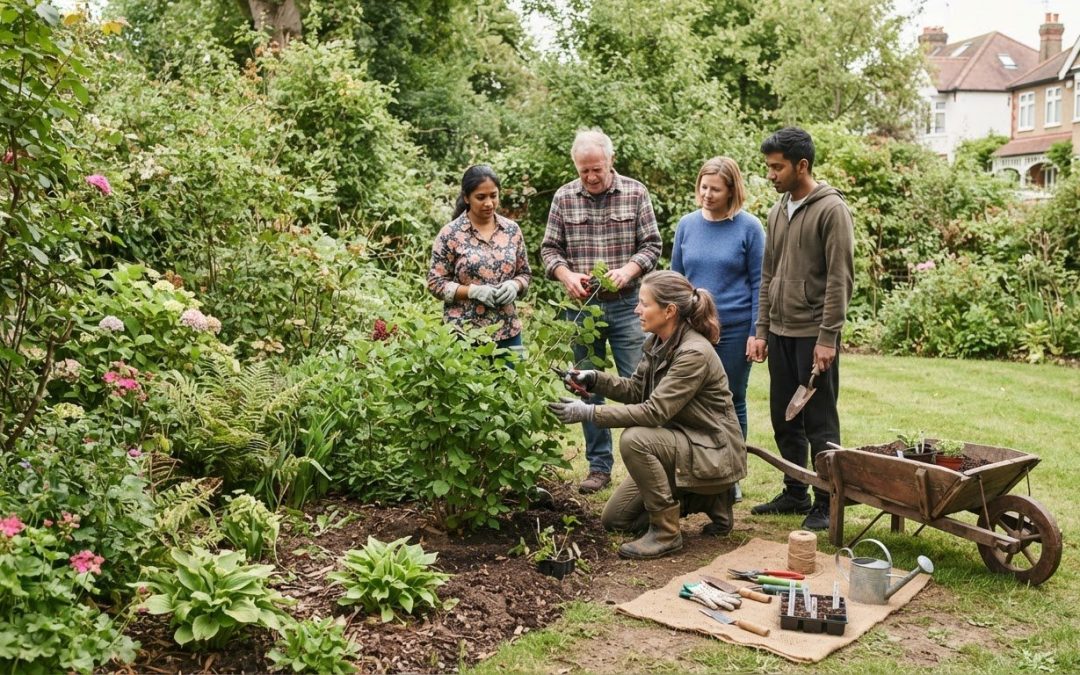
The most recognised qualification isn’t always the best first step. The gardener training courses UK learners choose should match the work they want to do and the way they learn best. A classroom course, online study or hands-on training can each suit a different goal.
This guide compares common UK training routes, from practical workshops to structured horticultural qualifications. You’ll learn what to look for in course content, how to match training to your experience and how to build skills for professional gardening or your own garden. For learners in Raynes Park, Stoneleigh, Worcester Park, Wimbledon, New Malden, Surbiton and Kingston, Premium Garden Services offers practical gardener training focused on useful horticultural skills and professional techniques. Kevin brings ten years of commercial gardening experience to this training.
Gardener training courses in the UK: what can you learn?
Gardener training builds horticultural knowledge and practical skills for working with plants and maintaining gardens. You might want to improve your own garden, prepare for paid work or gain confidence with professional techniques. Each goal calls for a different balance of theory and practice.
Course titles alone don’t tell you what you’ll be able to do afterwards. One course might focus on a seasonal task, whilst another covers wider plant knowledge or garden maintenance. Online study can help you learn theory, while supervised practice lets you apply techniques and receive feedback. Certificates and awards aren’t automatically equivalent, so compare the subject matter, assessment and stated outcome.
Which UK training routes suit different gardening goals?
Think of the options as three broad routes, rather than interchangeable course labels:
- Short workshops focus on a specific subject or task. They can suit keen gardeners who want to improve a particular skill.
- Broader courses cover a wider range of horticultural topics. They can help you build a foundation before choosing a specialism or taking on more responsibility.
- Qualification-led study follows a structured programme with defined learning outcomes. RHS Qualifications are one recognised route; examples include Level 2 and Level 3 certificates in practical horticulture, with blended-learning options listed by providers.
If you want stronger plant knowledge for home use, a focused workshop may be enough. If you’re hoping to enter horticulture, look for a course that builds broader knowledge and includes relevant practical learning. Compare the syllabus and assessment, not just the level or course name. The right gardener training courses UK learners choose are those that fit their intended next step and the skills they need to practise.
How to compare gardener training courses and choose the right fit
Compare what you’ll learn and how it supports your next step. Use this checklist to look beyond course titles:
- Goal: Decide whether you’re learning for personal interest, a specific gardening task or possible work in horticulture.
- Starting experience: Look for entry requirements or guidance on the knowledge you’re expected to have.
- Practical content: Check which tasks you’ll carry out, not just the topics covered in lessons.
- Format: Consider where and when learning takes place, and whether the schedule fits your routine.
- Stated outcome: Check whether you’ll gain a defined qualification, develop particular skills or complete set learning activities.
Course information should explain how practical work is organised, what tutor support is available and whether you’ll receive feedback. These details help you judge how well the course prepares you to apply what you’ve learnt. A qualification can support some career plans, but it isn’t necessary for every gardening role. Check whether the specific qualification is relevant to the work you have in mind.
Should you choose a practical, classroom-based or online course?
Online study can make theory easier to fit around work or home commitments. It suits learners who are comfortable studying independently, but practical skills still need to be practised and reviewed. Classroom sessions offer structured teaching and discussion; workshops focus on specific activities, whilst part-time courses spread learning over a longer schedule. Choose a format that fits both your circumstances and the skills you need to build. Premium Garden Services offers practical gardener training focused on horticultural skills and professional techniques.
Turn gardener training into practical skills for work or your own garden
Training becomes useful when you can apply what you’ve learnt to repeatable garden tasks. Mowing, pruning and weeding each call for sound technique and attention to the plants and conditions around you. Developing these skills can help you maintain your own garden or prepare for professional gardening work.
Build your ability through practice, observation and adjustment. Focus on one skill at a time, notice the result and decide what to learn next. For example, after practising a pruning technique, observe how the plant responds as it grows. You’ll have a practical question to take into your next lesson, rather than trying to master everything at once.
What should your next step be after comparing courses?
Before choosing, write down your goal, the gardening experience you already have and the way you prefer to learn. This quick check can help you find a course that fits your plans, rather than one with an appealing title alone. Your next step might be practising a core maintenance skill or building a wider base of horticultural knowledge.
Premium Garden Services provides gardener training to help people develop professional gardening techniques and horticultural skills. Kevin brings ten years of commercial gardening experience to this practical approach. The training is relevant to learners in Raynes Park, Stoneleigh, Worcester Park, Wimbledon, New Malden, Surbiton and Kingston. Find out more through Premium Garden Services’ gardener training.
Choose your next step and build gardening skills
The gardener training courses UK learners choose should match their goal, experience and preferred way to learn. Compare practical content and course outcomes, then put new skills to use through steady practice and observation. This approach can support confident garden maintenance or help you prepare for work in horticulture.
Premium Garden Services’ training focuses on professional gardening techniques and horticultural skills. For learners across Raynes Park, Stoneleigh, Worcester Park, Wimbledon, New Malden, Surbiton and Kingston, explore gardener training with Premium Garden Services and take a clear next step towards building useful skills.
Frequently Asked Questions
What qualifications do you need to become a gardener in the UK?
There isn’t one qualification required for every gardening role. Expectations depend on the job and employer, and you can build gardening knowledge through practical experience as well as accredited study. These routes are different: experience develops hands-on ability, while a qualification follows a formal course of learning. Check the specific job requirements or qualification route you’re considering, as UK requirements can vary.
Can you become a gardener without experience?
Yes, you can start without experience by learning the basics of plant care and garden maintenance. Build skills gradually, practising tasks such as weeding or mowing safely and within your ability. Training gives your learning structure, while practical experience helps develop confidence and judgement. Keep building your skills over time; completing a course doesn’t guarantee you’re ready for every gardening role.
Are online gardener training courses worth it?
Online study can be worthwhile if you need flexibility or want to build horticultural theory. When comparing gardener training courses UK providers offer, check the course content, how tutor feedback works and whether practical tasks are included. Hands-on skills need practice, so consider how you’ll apply what you learn. Don’t assume every online course includes supervised practice or leads to a recognised qualification.
How long does it take to train as a gardener in the UK?
There’s no single timeframe. Course length depends on its scope and format, and a short skills course differs from broader qualification-led study. Check the course’s published schedule for its duration and study commitments. Building confidence through experience is an ongoing process. If you’re considering gardening work around Raynes Park, Stoneleigh, Worcester Park, Wimbledon, New Malden, Surbiton or Kingston, match your learning plan to the role you have in mind.